
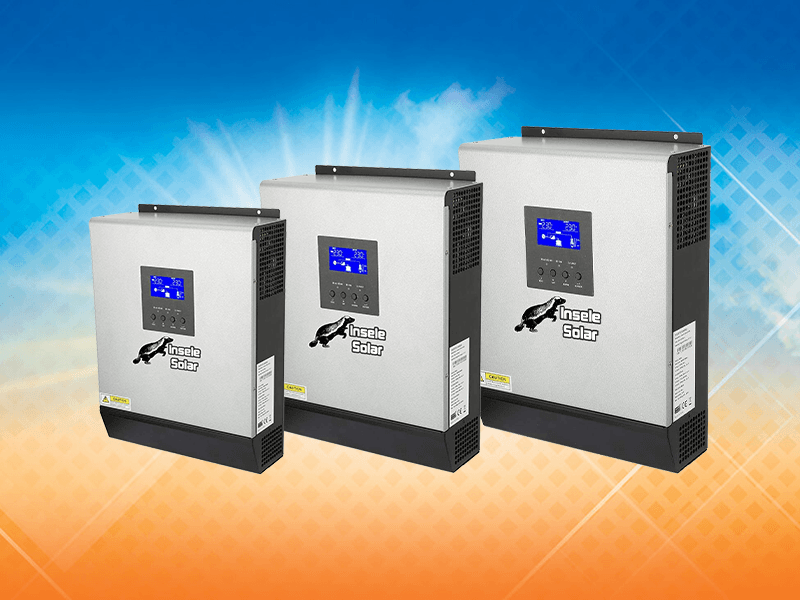
Pure Sine Wave Hybrid Inverter Versions
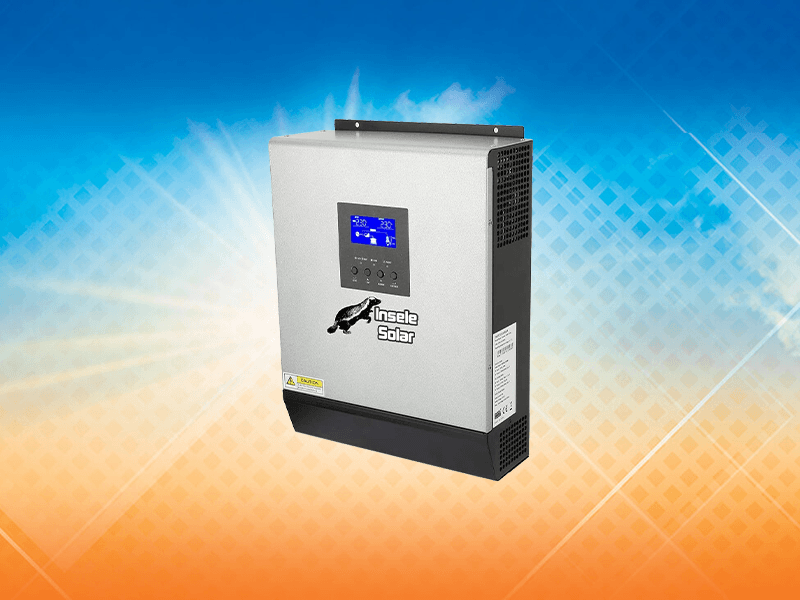
1kVA Inverter
800W of continuous power with a 24V battery voltage.
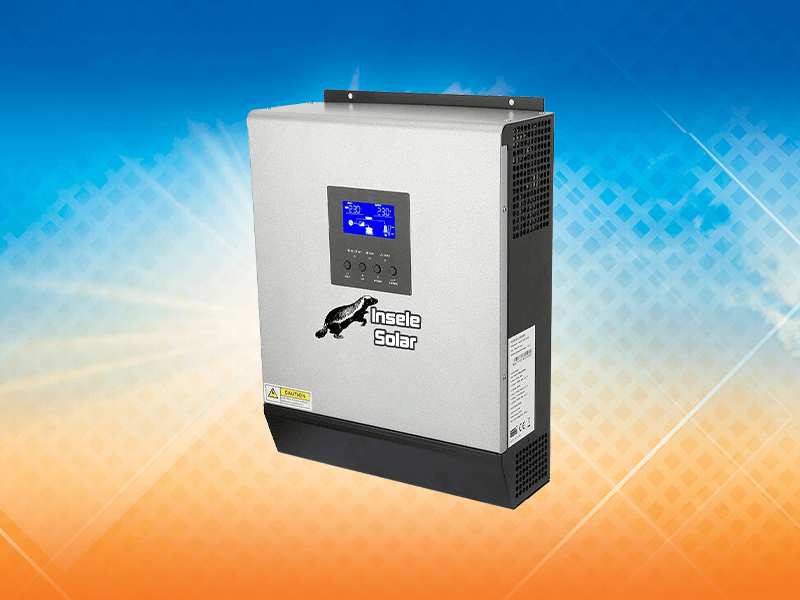
3kVA Inverter
2400W of continuous power with a 24V battery voltage.
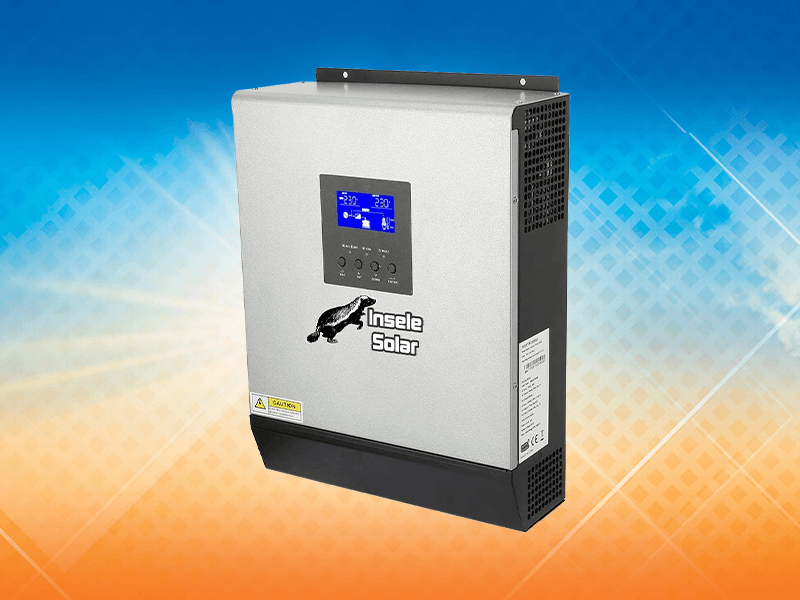
5kVA Inverter
4000W of continuous power with a 48V battery voltage.
| Size | Continuous power | Battery voltage | Available as |
|---|---|---|---|
| 1kVA | 800W | 12V | Inverter only |
| 3kVA | 2,400W | 24V | Inverter only |
| 5kVA | 4,000W | 48V | Inverter only |
Please enquire for pricing and bulk orders.
Specifications
| Specification | 1kVA | 3kVA | 5kVA |
|---|---|---|---|
| Input | |||
| Input voltage | 230V AC | 230V AC | 230V AC |
| Selectable voltage range | 170 to 280V AC for computers, 90 to 280V AC for home appliances | 170 to 280V AC for computers, 90 to 280V AC for home appliances | 170 to 280V AC for computers, 90 to 280V AC for home appliances |
| Frequency | 50Hz | 50Hz or 60Hz, auto sensing | 50Hz or 60Hz, auto sensing |
| Output | |||
| Rated power | 1,000VA / 800W | 3,000VA / 2,400W | 5,000VA / 4,000W |
| Waveform | pure sine wave | pure sine wave | pure sine wave |
| Surge power | 2,000VA | 6,000VA | 10,000VA |
| AC voltage regulation, battery mode | 230V AC ±5% | 230V AC ±5% | 230V AC ±5% |
| Peak efficiency | 90% | 93% | 93% |
| Transfer time | 10ms for computers, 20ms for home appliances | 10ms for computers, 20ms for home appliances | 10ms for computers, 20ms for home appliances |
| Parallel operation | not supported | not supported | up to 9 units |
| Battery and AC charger | |||
| Battery voltage | 12V DC | 24V DC | 48V DC |
| Float charge voltage | 14.1V DC | 27V DC | 54V DC |
| Overcharge protection | 15.5V DC | 31V DC | 60V DC |
| Maximum charge current | 10A or 20A | 20A or 30A | 60A |
| Battery supplied | 12.8V 100Ah LiPo lithium | 12.8V 100Ah LiPo lithium | 12.8V 100Ah LiPo lithium |
| Batteries per bank | 1 | 2 in series | 4 in series |
| Estimated battery life | 5 to 10 years | 5 to 10 years | 5 to 10 years |
| Solar charger | |||
| Charge controller type | PWM | PWM | MPPT |
| Charging current | 50A | 50A | 80A |
| Maximum PV array open circuit voltage | 40V DC | 80V DC | 145V DC |
| Maximum PV array power | 600W | 1,200W | 4,000W |
| MPPT range at operating voltage | not applicable | not applicable | 60V DC to 115V DC |
| Standby power consumption | 1W | 2W | 2W |
| Physical | |||
| Dimensions, D x W x H | 95 x 240 x 316mm | 305 x 272 x 100mm | 140 x 295 x 540mm |
| Net weight | 5kg | 6.9kg | 13.5kg |
| Operating environment | |||
| Humidity | 5% to 95% relative humidity | 5% to 95% relative humidity | 5% to 95% relative humidity |
| Operating temperature | 0°C to 55°C | 0°C to 55°C | 0°C to 55°C |
| Storage temperature | minus 15°C to 60°C | minus 15°C to 60°C | minus 15°C to 60°C |
Specifications are from the manufacturer and may change without notice.
Pure Sine Wave Hybrid Inverters Questions
How many watts is a 1kVA inverter?
The 1kVA inverter delivers 800W of continuous power. The 3kVA delivers 2,400W and the 5kVA delivers 4,000W. Surge ratings are higher, at 2,000VA, 6,000VA and 10,000VA, which covers the brief spike when a fridge or a pump starts up.
What battery do I need?
The 1kVA runs on a 12V battery bank, the 3kVA on 24V and the 5kVA on 48V. We supply 12.8V 100Ah LiPo lithium batteries, so that’s one battery for the 1kVA, two in series for the 3kVA and four in series for the 5kVA.
Which size do I need?
Add up the watts of everything you want to run at the same time. The total needs to stay below the inverter’s continuous power. Send us the list and we’ll help you work it out.
Do you show prices?
We quote on enquiry, because pricing depends on the size, the configuration and the quantity.
How many solar panels can I connect?
The 1kVA takes up to 600W of panels and the 3kVA up to 1,200W, both through a PWM charge controller. The 5kVA takes up to 4,000W through an MPPT controller, which harvests more on cold or overcast days.
Can I run more than one inverter together?
The 5kVA can be paralleled, up to nine units. The 1kVA and 3kVA run as single units.
How long do the batteries last?
We only supply LiPo lithium batteries with our inverters, with an estimated life of 5 to 10 years. Lithium handles daily cycling far better than lead acid, which is what makes it worth the higher cost up front.
See All FAQs →